
Author: David Wilber
Have you ever heard the popular saying, “Hurt people hurt people”? The idea is that when someone acts like a jerk, someone else was likely a jerk to them. Someone planted that seed in his or her life. Thus, they don’t know what else to do except produce the fruit of death that comes forth from that seed.
Ever since the fall of Adam and Eve, our world has been in a constant state of corruption. Sin was brought into our world through Adam (Romans 5:12), and with sin came death, pain, suffering, and sorrow. As redeemed sons and daughters of the Most High and disciples of Yeshua (Jesus), how should we respond?
On one hand, we must accept the fact that evil and sin exist in our world. We await the “new heavens and new earth” when God will set everything right and restore all things back to perfection (Revelation 21-22). But that doesn’t mean we just sit on our hands and wait for God to fix everything. No, we are called to be part of God’s restoration process.
And your ancient ruins shall be rebuilt; you shall raise up the foundations of many generations; you shall be called the repairer of the breach, the restorer of streets to dwell in. (Isaiah 58:12)
Our world is broken and corrupt, and God’s people are commissioned to reverse the curse by means of performing God’s mitzvot (commandments). We learn from the Bible that God’s mitzvot are ways of life. Indeed, following God’s instructions results in blessing and restoration. On the other hand, ignoring His instructions contributes to the death and corruption of our fallen world.
I call heaven and earth to witness against you today, that I have set before you life and death, blessing and curse. Therefore choose life, that you and your offspring may live. (Deuteronomy 30:19)
Not only does following God’s mitzvot bring life, but it also helps prepare the world for the coming of Messiah’s Kingdom. In fact, Peter said that when we live a holy life we are “hastening the coming of the day of God” (2 Peter 3:11-12). Sometimes it’s difficult to believe that our actions make that big of an impact in this world, and this is mostly because we don’t often see the results. As humans, we have limited, finite perspectives. How does resting on the Sabbath, giving to the poor, or praying for our enemies practically bring restoration or hasten Yeshua’s coming? The simple answer is that we don’t always see it with our natural eyes, but we walk in faith. We don’t have to see the results because we are to trust God at His Word.
With that in mind, let’s get back to the “hurt people hurt people” concept. Have you ever considered that God allows certain people to insult or offend you so you can take the bullet and stop the cycle of hurt? What if God chose you to be hurt so that you can respond with a seed of life and love—thereby reversing the curse instead of perpetuating it? Perhaps God uses our spiritual maturity, through the grace and love of Messiah, to bring restoration in these small ways when we deal with hurt people.
The easy thing to do when someone acts like a jerk towards us is to react from the basis of the pain that person caused us. We immediately get defensive, seek validation, and often retaliate. Sometimes these conflicts will ruin our entire day to the point where we can’t even think about anything else. Reacting this way only adds to the corruption. When we retaliate and repay evil with evil, we continue to sow those same seeds of death that were just sown into us. This is not the spiritual response that Messiah expects of His ambassadors. Torah instructs us not to take vengeance, but to love those who have hurt us:
You shall not take vengeance or bear a grudge against the sons of your own people, but you shall love your neighbor as yourself: I am the Lord. (Leviticus 19:18)
Paul instructs us not to avenge ourselves, but to submit it to God. He further instructs us to love and care for our enemies and overcome evil with good:
If your enemy is hungry, feed him; if he is thirsty, give him something to drink; for by so doing you will heap burning coals on his head. Do not be overcome by evil, but overcome evil with good. (Romans 12:21)
We must remember that Yeshua loved us while we were still sinners. It’s only by His grace that we are a new creation. Therefore, we must display His love and grace to those who sin against us. That’s the ministry we’ve been given. And after all, it is God’s kindness that leads to repentance.
Love is the only thing that can truly repair this broken world.
One might say, “Well that sounds nice, but how do you expect me to actually do this? You don’t understand how badly I’ve been hurt. And some people just don’t change. They aren’t interested in healing or reconciliation.”
First of all, this goes back to walking in faith. Trust God and love beyond what you can see with your natural eyes. In other words, true love doesn’t depend on how others respond. Understand that your identity is in Yeshua, not in their acceptance of you or whether or not they ever change. Once you love truly, as Messiah loved you (even while you were still a sinner), you will be released from your need of acceptance from people. Even if they never repent for hurting you, don’t contribute to the corruption by repeating the cycle of hurt. (Now, that certainly doesn’t mean you must keep a close relationship with them or that there aren't consequences to their unrepentance.) We are called to subject ourselves to the Spirit, not our flesh. Ask God to fill you with His Holy Spirit and help you be the restorer you’re called to be.
Secondly, never lose hope. Pray for them. If God changed you, He can change them. Søren Kierkegaard once said, “Never cease loving a person, and never give up hope for him, for even the prodigal son who had fallen most low, could still be saved; the bitterest enemy and also he who was your friend could again be your friend; love that has grown cold can kindle.”
This is the hardest and most unreasonable commandment in Scripture. Everything inside of us does not want to love our enemies and pray for those who have hurt us. But according to Yeshua, that's part of what it means to be children of our Father in heaven (Matthew 5:45). We are to live a holy life. We are to have the heart of Yeshua who commanded us to turn the other cheek. We are to bring restoration and hasten the coming of the day of God. It's not easy, but if the Holy Spirit lives inside of you, He will help you. Walk in faith.

We often think of prosperity as something material. Prosperity from walking in obedience is often the opposite. It is having a deeper relationship with the Creator. It is when the desires of our heart become His desires.

Emotions are powerful. Our emotions, like compassion and empathy, often motivate us to do wonderful things like give to charity and help people in need. When we see an injustice, many times it will deeply affect us and move us to take positive action. And yet, strong negative emotions—jealousy, vindictiveness, resentment—can often overpower our better judgment and move us to neglect or hurt people.

The difficulties that we endure in this life are sometimes so painful that we feel stuck in unending sorrow. Many of us have been through tragedies that have left us with a crushing despair, which years later turns into a continuous dull ache that never leaves. We become despondent and therefore reluctant to believe that God could heal us.

Can you recall times in your life when you’ve lost control of your emotions? Perhaps it happens more often than you’d like to admit. We’ve all had heated moments where we’ve reacted out of anger or pain, often provoking others and dragging out arguments. What guidance do the Scriptures give us in these situations?

Is there a danger of leaving Jesus and the Gospel behind in our pursuit of Torah obedience?

Many of us carry around a deep sense of rejection, insecurity, and longing. We struggle to feel accepted, which sometimes drives us to unhealthy behavior. What does the Bible teach us about overcoming these feelings?

When the New Testament authors talk about Abraham, they always highlight his faith. Indeed, Abraham is most well known, both in Judaism and Christianity, for his great faith in the God of Israel. But Abraham also exhibited another important godly characteristic that is often overlooked: hospitality.

Our Messiah said that His return at the end of the age will be like the days of Noah. What can we learn from Noah's flood as it concerns the end days?

We are told in 1 John 4:1 and other passages to “test” the message of a teacher or prophet to see if what they say is truly from God. The reason is that “many false prophets have gone out into the world” and are leading believers astray. What are some of the identifying marks of a false teacher/prophet?

I love to be outside in Yahweh’s beautiful creation. Not too long ago, I spent some time in the woods. I was a good distance from the truck, but I didn’t realize it until the sky started to darken and I heard thunder. A storm was coming. But it was too late. I knew there was no way I’d make it back to my vehicle.

It is often said that believers ought not to judge. Indeed, “Judge not that you be not judged” is one of the most memorized Bible verses ever. Even people who have never read a Bible in their life will immediately quote that verse to silence anyone who might dare express disapproval toward them. But is it true that we are not to ever judge anyone?

Feelings are important and shouldn't be dismissed. But we must not be led by our feelings. We cannot assume that our feelings reflect the complete truth of any situation. Our feelings reflect only how we interpret the truth of the situation. New information or another perspective often leads to a different interpretation.

Why do people complain and rebel against God’s will? Before we answer that question, it’s important to understand that the reason given by the complaining rebels is usually not the complete picture. They give one reason for their complaint, but there is often a secret reason below the surface.

Recently my wife Diana and I had the opportunity to travel to North Carolina to attend and speak at a conference. The weekend was wonderful, and I was so blessed by the encouragement from believers around the world. But I admit I didn’t feel that way at the beginning.

Did you know that God gives us physical things to do in order to teach us spiritual principles? Indeed, He didn’t give us a bunch of random commandments just to watch us jump through religious hoops. He is a loving Father, and His Torah (instructions) is designed to teach us His character and His truth. Every “jot and tittle” in God’s Word has a profound Spiritual purpose—whether or not we recognize it from our limited perspectives.

It's easy to get discouraged by the instability of our culture these days. There is a growing distrust towards our leaders, the Media, and each other—and for good reasons, in many cases! But we shouldn't feel hopeless. Instead we should consider this the perfect opportunity to be a light in the darkness by offering something different, something stable, something that people can hold on to.

In Matthew 24, Yeshua (Jesus) told His followers to look for very specific signs that will mark the end of this present age and signify His Second Coming. But what are faithful followers of the Messiah supposed to do with these signs? How are we to live our lives as these signs begin to take place?

Have you ever heard the popular saying, “Hurt people hurt people”? The idea is that when someone acts like a jerk, someone else was likely a jerk to them. Someone planted that seed in his or her life. Thus, they don’t know what else to do except produce the fruit of death that comes forth from that seed.
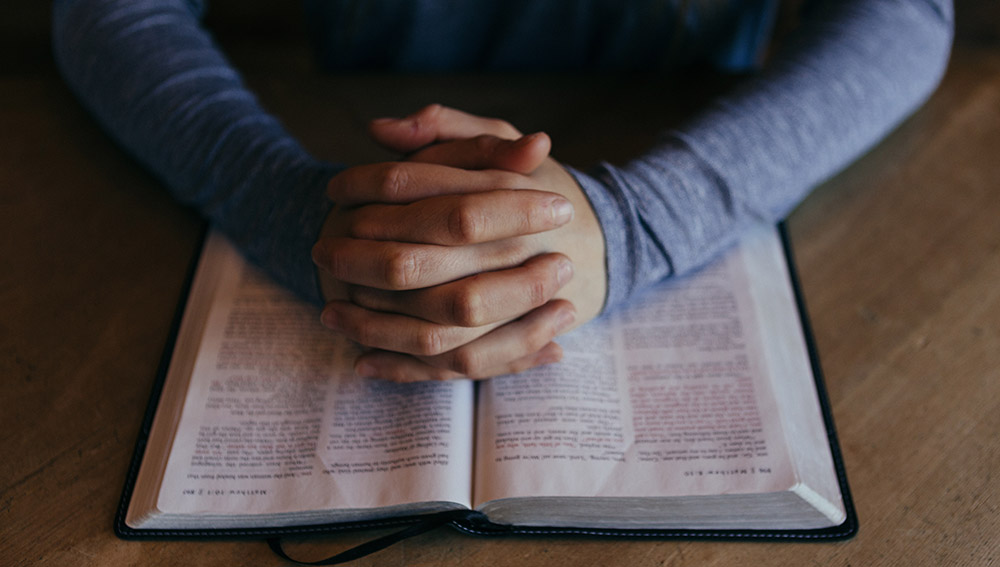
Why on earth does God care about whether or not we rest on the Sabbath or eat unclean animals? Is it that big of a deal? What do these things really have to do with being a Christian?

Did you know that you and your spouse weren’t brought together by accident? God put you together for a reason, which is to fulfill His will on earth and to be a picture of Messiah and the Church. Marriage is important to God, and He desires your marriage to flourish.

From the very beginning we see that God’s divine purpose for man includes being in community. Indeed, it was God Himself who said, "It is not good that man should be alone" (Genesis 2:18). God declared everything else in creation tov—good—but He apparently thought it was a problem that Adam didn’t have any fellowship. So, what did He do? He established the very first community of believers by creating Chavah (Eve), thus showing that His divine will for man is perfected in the fellowship and unity of His people.

There is perhaps no experience more painful than losing a loved one to death. What does the Bible say about finding comfort and hope in these difficult times?

One of the greatest temptations of mankind is to exalt ourselves. We want people to think we're the smartest, coolest, and most talented. We want to be seen and admired for our gifts and talents. It's natural to desire acceptance and affirmation from others, but there's a danger of idolatry when we make God's work about us instead of Him.

In the Bible we often see God speaking to people, seemingly having regular conversations with them, and revealing Himself in very tangible ways. But that’s not the regular experience of many believers today. Did something change?

In chapter one of Acts, Luke speaks of the miracles that Yeshua did to prove He was alive after He was resurrected. He appeared to the disciples and many others for forty days and taught them about the kingdom of Yahweh. This chapter is also where Yeshua tells the apostles to wait in Jerusalem for the gift that the Father had promised—the receiving of the Holy Ruach (Spirit).

Yeshua said that the world would know the Father sent Him when His followers are united (John 17:21). Therefore, we as believers have an important duty to try to maintain unity within the body of Messiah. But in order to work towards unity, we must first identify the cause of disunity.

Solomon, the author of Ecclesiastes, wrote how there is a time for everything. There’s “a time to weep, and a time to laugh; a time to mourn, and a time to dance” (Ecclesiastes 3:4). The season of Sukkot is not the time of weeping and mourning. That time was during the month of Elul leading all the way up to Yom Kippur. Sukkot is the time of laughing and dancing. Indeed, God explicitly commands us to “rejoice” in this season!
A consistent theme that we see in the Scriptures is God’s call for His people to make up their minds. God spoke through the prophet Elijah, “How long will you go limping between two different opinions? If the Lord is God, follow him; but if Baal, then follow Him” (1 Kings 18:21). God sovereignly chose these words to appear in His Holy Scriptures to be read by us today. He’s asking us the same question: How long before we decide whom we want to follow?

On the Hebrew Calendar, the month before the fall feast days is called Elul. In Judaism, this month is traditionally associated with the theme of repentance, or in Hebrew, teshuvah. It’s a time of introspection, reconciliation, and preparation.

Rodney Thompson speaks on what it really means to "come out from among them" (2 Corinthians 6:17).


Kelly Neumann gives insights from the book of Job and how to see God's goodness in the midst of suffering.


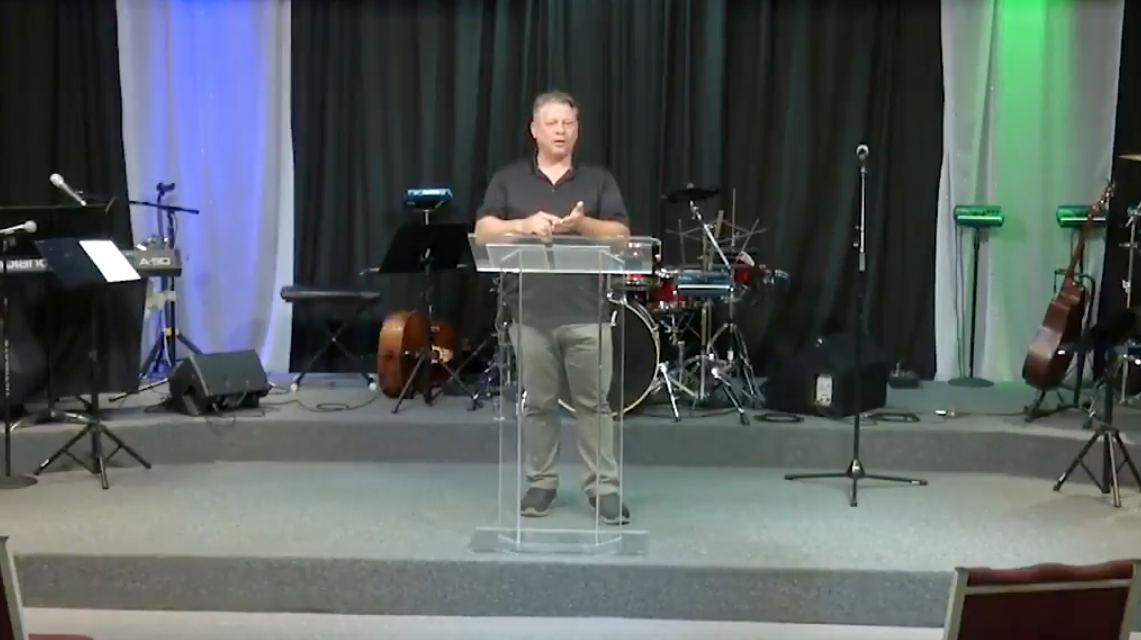
Jim Lindley speaks on King David's confrontation with the "5 Giants" and how that relates to spiritual warfare.

Paul Tremlin continues his series on the Fruit of the Spirit, this time covering "Goodness."
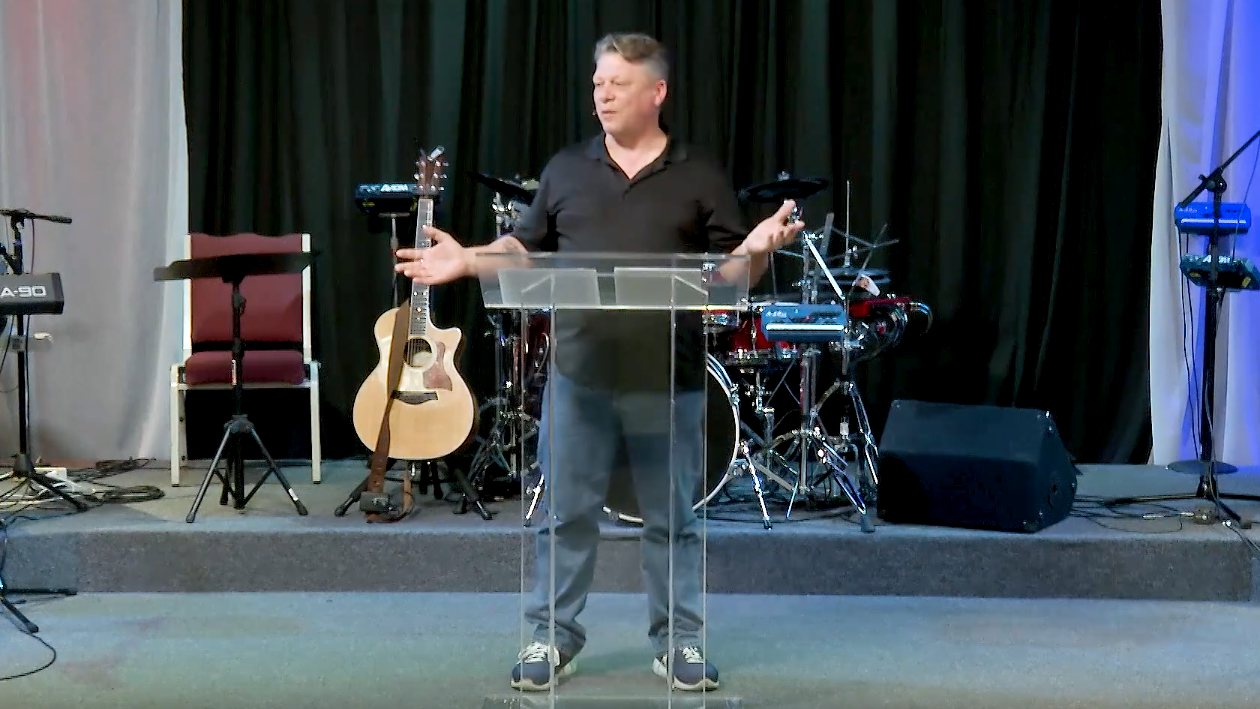

Mark Jacob teaches on the manifestation of the Gifts of the Spirit in both the Old and New Testament.


David Wilber teaches on the counting of the Omer and how it relates to the Great Commission

Mark Jacob gives an overview of Passover and firstfruits and how it connects to the death and resurrection of Messiah Yeshua


Pastor David Robinson digs up the root of spiritual apathy and unpacks how we can overcome by the Lord's help


Paul Tremlin dives into the Scriptures and science to understand the power of our words.



Pastor David Robinson goes over the plagues sent upon Egypt and how each plague was a direct judgment against the various false gods in Egypt.


Pastor David Wilber speaks on the tithe, what it is according to the Bible, and how it might apply today.
Guest speaker Bill Cloud speaks on rededication and trading our old garments for robes of righteousness.


Pastor David Robinson speaks on the history of Thanksgiving and what it means for Christians today.
Partner With Us

Your support makes it possible for us to share the Word of God with people around the world through our weekly services, live broadcast, and online media resources like this article. Partner with us in reaching the nations with the Gospel of Yeshua/Jesus and the truth of His Word!
On every 4th of July in America, we are reminded of the value of liberty. But liberty is not an American concept; it's a biblical concept. God created us to be free.