
Author: David Robinson
Did you know that you and your spouse weren’t brought together by accident? God put you together for a reason, which is to fulfill His will on earth and to be a picture of Messiah and the Church. Marriage is important to God, and He desires your marriage to flourish.
Many of the problems we face in our marriages are ultimately rooted in an unrealistic expectation of what marriage is supposed to look like. Movies and TV shows have given us a distorted perspective. We wrongly believe that marriage will provide ultimate fulfillment, thus we demand that our marriage give us something it was never designed to give. We make an idol out of our spouse and blame them when they fail to deliver on our unreasonable expectations.
Sadly, as a result of this self-centered perspective on marriage, many couples live in misery and often get divorced. But it isn’t meant to be this way.
There is a better way.
God doesn’t promise that we’ll never face difficulties in marriage. In fact, marriage is most often the very means by which God challenges us and conforms us into the image of His Son! However, with a right perspective on marriage and using the tools He gives us in His Word, we can know how to handle conflict when it arises and have a happy marriage for His glory.
These three biblical keys aren’t the only tools available in God’s Word. But they will serve as a good introduction to help you on your way to a happy marriage.
1) Respect
In essence, respecting your spouse is valuing them and holding them in high esteem. This means validating their feelings—even when you disagree. Ephesians 5:33 says, “Let each one of you love his wife as himself, and let the wife see that she respects her husband.” To love your spouse as you love yourself is to value their feelings and opinions just as you value your own. (And we all value our own feelings and opinions.) Don’t disregard what your spouse shares with you. Don’t get frustrated or angry if you don’t like what they say. Be patient and listen.
Remember, your marriage is a picture of the Messiah’s relationship with the Church. When you fail to show your spouse respect, you distort that picture. Thus, respecting your spouse is ultimately connected to respecting God.
2) Support
It might seem counterintuitive for many people, but being happy in marriage requires taking the focus off of ourselves. When you are selfless and focused on fulfilling your spouse’s needs instead of striving to get what you want, you’ll often find that your spouse is more than willing to reciprocate. Proverbs 11:25 says, “Whoever brings blessing will be enriched, and one who waters will himself be watered.”
Support takes many forms. The simplest and often most needed form of support is encouragement and verbal affirmation. This goes back to Respect. If you value your spouse, you’ll value their hopes, dreams, trust, and sense of security. You’ll put their needs before your own.
Do nothing from selfish ambition or conceit, but in humility count others more significant than yourselves. (Philippians 2:3)
3) Listen
Most of the problems we face in marriage are due to not knowing how to communicate effectively. Conflict turns into bitter arguing and unresolved resentment. Instead of listening to our spouse and validating their feelings, we get busy formulating counter arguments and building our case against them. We listen to reply rather than listening to learn. But this response puts them on the defensive and makes it more difficult to resolve the problems.
A fool takes no pleasure in understanding, but only in expressing his opinion. (Proverbs 18:2)
Know this, my beloved brothers: let every person be quick to hear, slow to speak, slow to anger. (James 1:19)
This key goes back to Respect too. If we truly value our spouse, we will value their opinions. It also goes back to Support. Supporting our spouse means working together as a team, not as opponents. You have the same goal, which is to resolve the conflict. Too often people get so distracted with “winning” the argument that they lose sight of the goal!
Marriage cannot flourish in a self-centered environment. It can’t flourish without mutual respect and support. But when you build your marriage on the foundation of Messiah and apply these biblical principles, you’ll discover that it is possible to have a happy marriage. The simple formula is to love your spouse more than yourself. Respect them, support them, and listen to them. And then watch as new life is breathed into your marriage!

We often think of prosperity as something material. Prosperity from walking in obedience is often the opposite. It is having a deeper relationship with the Creator. It is when the desires of our heart become His desires.

Emotions are powerful. Our emotions, like compassion and empathy, often motivate us to do wonderful things like give to charity and help people in need. When we see an injustice, many times it will deeply affect us and move us to take positive action. And yet, strong negative emotions—jealousy, vindictiveness, resentment—can often overpower our better judgment and move us to neglect or hurt people.

The difficulties that we endure in this life are sometimes so painful that we feel stuck in unending sorrow. Many of us have been through tragedies that have left us with a crushing despair, which years later turns into a continuous dull ache that never leaves. We become despondent and therefore reluctant to believe that God could heal us.

Can you recall times in your life when you’ve lost control of your emotions? Perhaps it happens more often than you’d like to admit. We’ve all had heated moments where we’ve reacted out of anger or pain, often provoking others and dragging out arguments. What guidance do the Scriptures give us in these situations?

Is there a danger of leaving Jesus and the Gospel behind in our pursuit of Torah obedience?

Many of us carry around a deep sense of rejection, insecurity, and longing. We struggle to feel accepted, which sometimes drives us to unhealthy behavior. What does the Bible teach us about overcoming these feelings?

When the New Testament authors talk about Abraham, they always highlight his faith. Indeed, Abraham is most well known, both in Judaism and Christianity, for his great faith in the God of Israel. But Abraham also exhibited another important godly characteristic that is often overlooked: hospitality.

Our Messiah said that His return at the end of the age will be like the days of Noah. What can we learn from Noah's flood as it concerns the end days?

We are told in 1 John 4:1 and other passages to “test” the message of a teacher or prophet to see if what they say is truly from God. The reason is that “many false prophets have gone out into the world” and are leading believers astray. What are some of the identifying marks of a false teacher/prophet?

I love to be outside in Yahweh’s beautiful creation. Not too long ago, I spent some time in the woods. I was a good distance from the truck, but I didn’t realize it until the sky started to darken and I heard thunder. A storm was coming. But it was too late. I knew there was no way I’d make it back to my vehicle.

It is often said that believers ought not to judge. Indeed, “Judge not that you be not judged” is one of the most memorized Bible verses ever. Even people who have never read a Bible in their life will immediately quote that verse to silence anyone who might dare express disapproval toward them. But is it true that we are not to ever judge anyone?

Feelings are important and shouldn't be dismissed. But we must not be led by our feelings. We cannot assume that our feelings reflect the complete truth of any situation. Our feelings reflect only how we interpret the truth of the situation. New information or another perspective often leads to a different interpretation.

Why do people complain and rebel against God’s will? Before we answer that question, it’s important to understand that the reason given by the complaining rebels is usually not the complete picture. They give one reason for their complaint, but there is often a secret reason below the surface.

Recently my wife Diana and I had the opportunity to travel to North Carolina to attend and speak at a conference. The weekend was wonderful, and I was so blessed by the encouragement from believers around the world. But I admit I didn’t feel that way at the beginning.

Did you know that God gives us physical things to do in order to teach us spiritual principles? Indeed, He didn’t give us a bunch of random commandments just to watch us jump through religious hoops. He is a loving Father, and His Torah (instructions) is designed to teach us His character and His truth. Every “jot and tittle” in God’s Word has a profound Spiritual purpose—whether or not we recognize it from our limited perspectives.

It's easy to get discouraged by the instability of our culture these days. There is a growing distrust towards our leaders, the Media, and each other—and for good reasons, in many cases! But we shouldn't feel hopeless. Instead we should consider this the perfect opportunity to be a light in the darkness by offering something different, something stable, something that people can hold on to.

In Matthew 24, Yeshua (Jesus) told His followers to look for very specific signs that will mark the end of this present age and signify His Second Coming. But what are faithful followers of the Messiah supposed to do with these signs? How are we to live our lives as these signs begin to take place?

Have you ever heard the popular saying, “Hurt people hurt people”? The idea is that when someone acts like a jerk, someone else was likely a jerk to them. Someone planted that seed in his or her life. Thus, they don’t know what else to do except produce the fruit of death that comes forth from that seed.
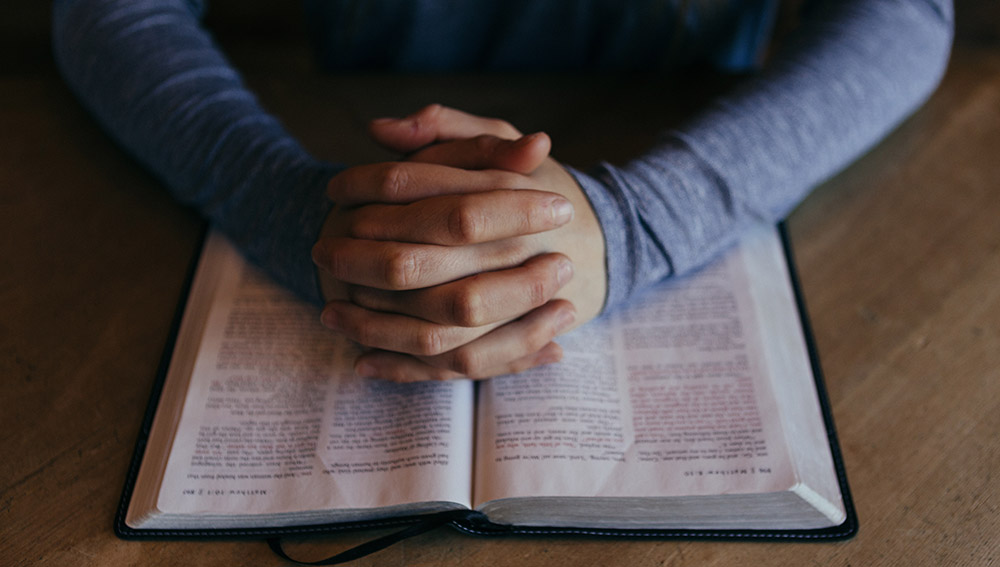
Why on earth does God care about whether or not we rest on the Sabbath or eat unclean animals? Is it that big of a deal? What do these things really have to do with being a Christian?

Did you know that you and your spouse weren’t brought together by accident? God put you together for a reason, which is to fulfill His will on earth and to be a picture of Messiah and the Church. Marriage is important to God, and He desires your marriage to flourish.

From the very beginning we see that God’s divine purpose for man includes being in community. Indeed, it was God Himself who said, "It is not good that man should be alone" (Genesis 2:18). God declared everything else in creation tov—good—but He apparently thought it was a problem that Adam didn’t have any fellowship. So, what did He do? He established the very first community of believers by creating Chavah (Eve), thus showing that His divine will for man is perfected in the fellowship and unity of His people.

There is perhaps no experience more painful than losing a loved one to death. What does the Bible say about finding comfort and hope in these difficult times?

One of the greatest temptations of mankind is to exalt ourselves. We want people to think we're the smartest, coolest, and most talented. We want to be seen and admired for our gifts and talents. It's natural to desire acceptance and affirmation from others, but there's a danger of idolatry when we make God's work about us instead of Him.

In the Bible we often see God speaking to people, seemingly having regular conversations with them, and revealing Himself in very tangible ways. But that’s not the regular experience of many believers today. Did something change?

In chapter one of Acts, Luke speaks of the miracles that Yeshua did to prove He was alive after He was resurrected. He appeared to the disciples and many others for forty days and taught them about the kingdom of Yahweh. This chapter is also where Yeshua tells the apostles to wait in Jerusalem for the gift that the Father had promised—the receiving of the Holy Ruach (Spirit).

Yeshua said that the world would know the Father sent Him when His followers are united (John 17:21). Therefore, we as believers have an important duty to try to maintain unity within the body of Messiah. But in order to work towards unity, we must first identify the cause of disunity.

Solomon, the author of Ecclesiastes, wrote how there is a time for everything. There’s “a time to weep, and a time to laugh; a time to mourn, and a time to dance” (Ecclesiastes 3:4). The season of Sukkot is not the time of weeping and mourning. That time was during the month of Elul leading all the way up to Yom Kippur. Sukkot is the time of laughing and dancing. Indeed, God explicitly commands us to “rejoice” in this season!

A consistent theme that we see in the Scriptures is God’s call for His people to make up their minds. God spoke through the prophet Elijah, “How long will you go limping between two different opinions? If the Lord is God, follow him; but if Baal, then follow Him” (1 Kings 18:21). God sovereignly chose these words to appear in His Holy Scriptures to be read by us today. He’s asking us the same question: How long before we decide whom we want to follow?

On the Hebrew Calendar, the month before the fall feast days is called Elul. In Judaism, this month is traditionally associated with the theme of repentance, or in Hebrew, teshuvah. It’s a time of introspection, reconciliation, and preparation.

Rodney Thompson speaks on what it really means to "come out from among them" (2 Corinthians 6:17).


Kelly Neumann gives insights from the book of Job and how to see God's goodness in the midst of suffering.


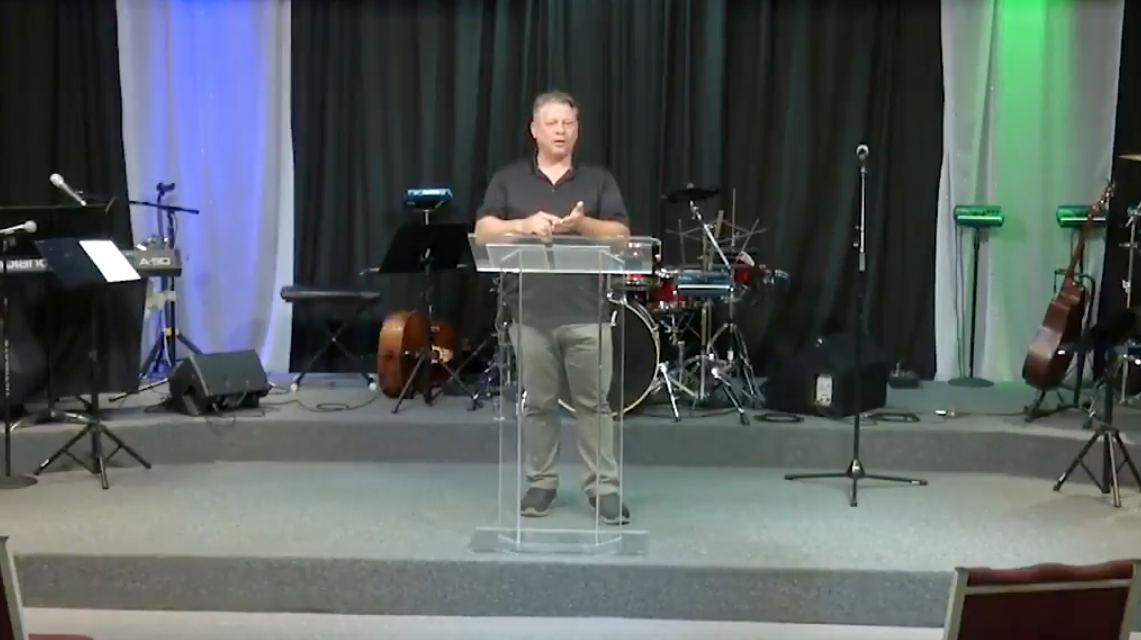
Jim Lindley speaks on King David's confrontation with the "5 Giants" and how that relates to spiritual warfare.

Paul Tremlin continues his series on the Fruit of the Spirit, this time covering "Goodness."
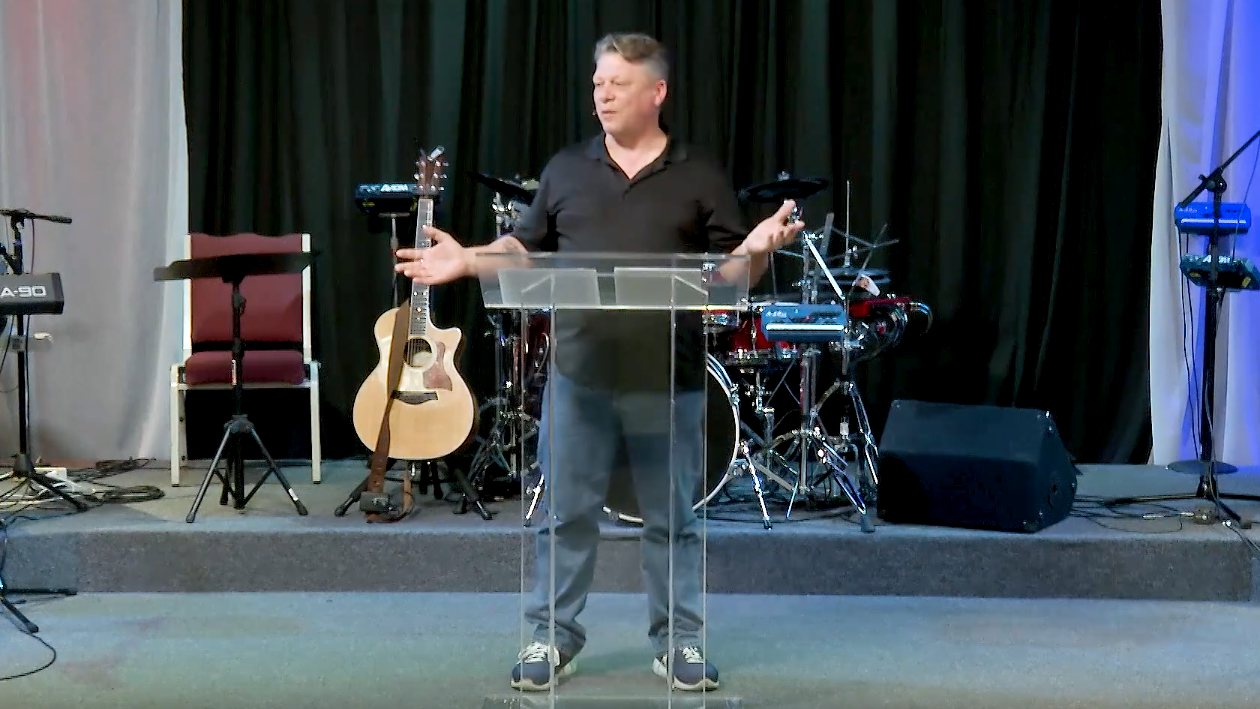

Mark Jacob teaches on the manifestation of the Gifts of the Spirit in both the Old and New Testament.


David Wilber teaches on the counting of the Omer and how it relates to the Great Commission

Mark Jacob gives an overview of Passover and firstfruits and how it connects to the death and resurrection of Messiah Yeshua


Pastor David Robinson digs up the root of spiritual apathy and unpacks how we can overcome by the Lord's help


Paul Tremlin dives into the Scriptures and science to understand the power of our words.

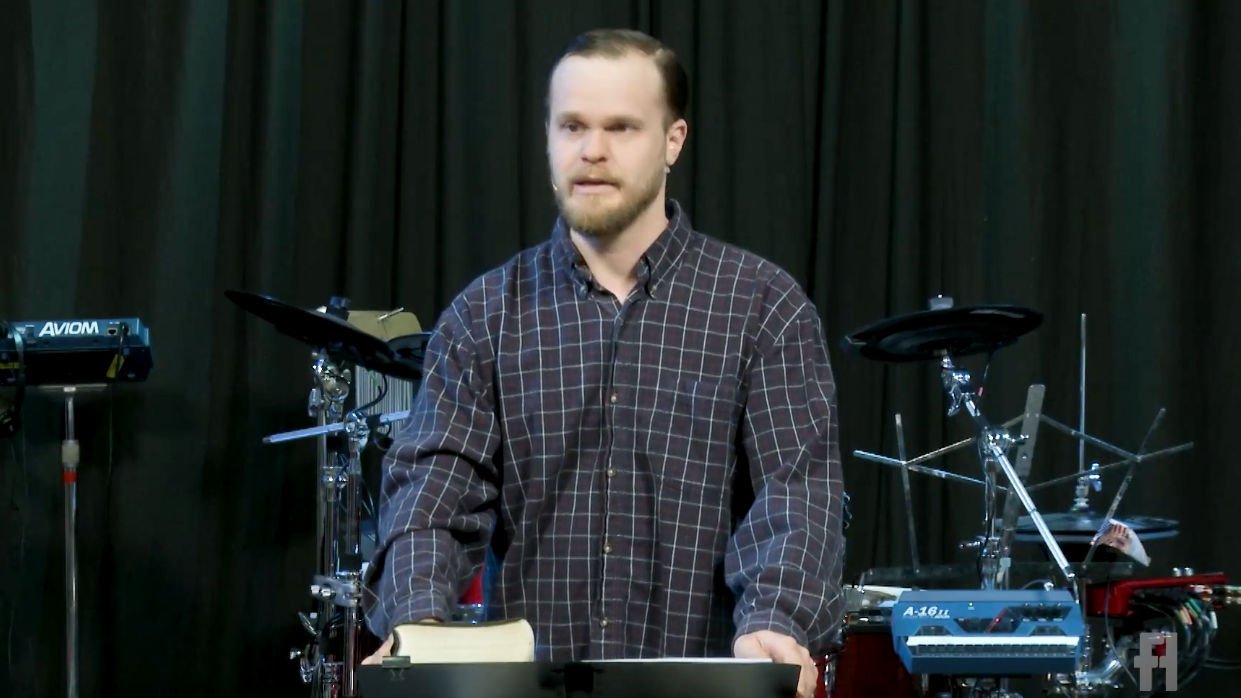


Pastor David Robinson goes over the plagues sent upon Egypt and how each plague was a direct judgment against the various false gods in Egypt.


Pastor David Wilber speaks on the tithe, what it is according to the Bible, and how it might apply today.
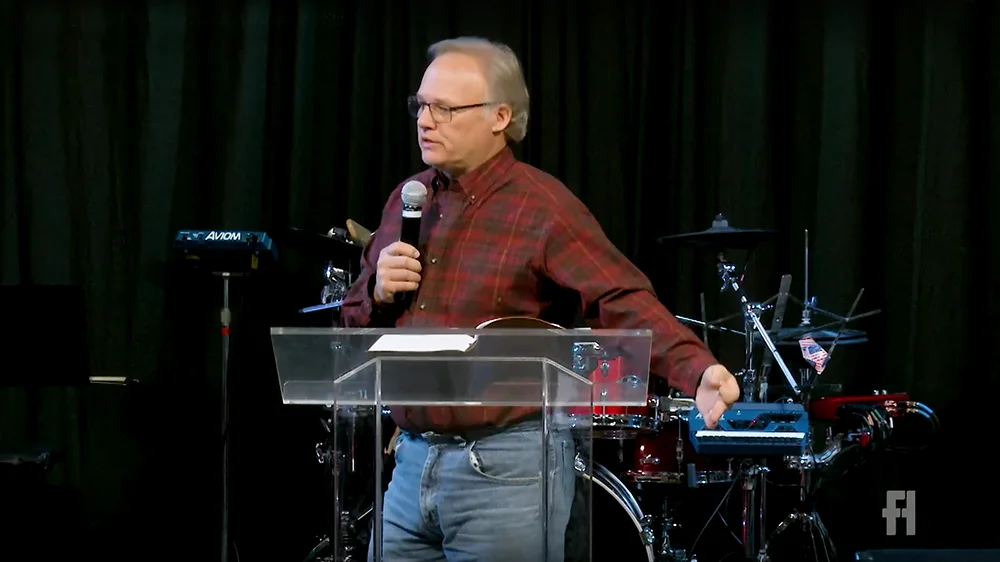
Guest speaker Bill Cloud speaks on rededication and trading our old garments for robes of righteousness.


Pastor David Robinson speaks on the history of Thanksgiving and what it means for Christians today.
Partner With Us

Your support makes it possible for us to share the Word of God with people around the world through our weekly services, live broadcast, and online media resources like this article. Partner with us in reaching the nations with the Gospel of Yeshua/Jesus and the truth of His Word!
On every 4th of July in America, we are reminded of the value of liberty. But liberty is not an American concept; it's a biblical concept. God created us to be free.