

Browse our growing library of articles by clicking the arrows on the top-right of each category below. If you'd like to be notified when new articles are released, subscribe to our newsletter to stay connected!
Latest Articles

We often think of prosperity as something material. Prosperity from walking in obedience is often the opposite. It is having a deeper relationship with the Creator. It is when the desires of our heart become His desires.

Emotions are powerful. Our emotions, like compassion and empathy, often motivate us to do wonderful things like give to charity and help people in need. When we see an injustice, many times it will deeply affect us and move us to take positive action. And yet, strong negative emotions—jealousy, vindictiveness, resentment—can often overpower our better judgment and move us to neglect or hurt people.

The difficulties that we endure in this life are sometimes so painful that we feel stuck in unending sorrow. Many of us have been through tragedies that have left us with a crushing despair, which years later turns into a continuous dull ache that never leaves. We become despondent and therefore reluctant to believe that God could heal us.

Can you recall times in your life when you’ve lost control of your emotions? Perhaps it happens more often than you’d like to admit. We’ve all had heated moments where we’ve reacted out of anger or pain, often provoking others and dragging out arguments. What guidance do the Scriptures give us in these situations?

Is there a danger of leaving Jesus and the Gospel behind in our pursuit of Torah obedience?

Many of us carry around a deep sense of rejection, insecurity, and longing. We struggle to feel accepted, which sometimes drives us to unhealthy behavior. What does the Bible teach us about overcoming these feelings?

When the New Testament authors talk about Abraham, they always highlight his faith. Indeed, Abraham is most well known, both in Judaism and Christianity, for his great faith in the God of Israel. But Abraham also exhibited another important godly characteristic that is often overlooked: hospitality.

Our Messiah said that His return at the end of the age will be like the days of Noah. What can we learn from Noah's flood as it concerns the end days?

As Christians around the world are embracing the roots of their faith and returning to what the Bible says about many practical issues, a very relevant question is often asked: Should men shave their beards?

We are told in 1 John 4:1 and other passages to “test” the message of a teacher or prophet to see if what they say is truly from God. The reason is that “many false prophets have gone out into the world” and are leading believers astray. What are some of the identifying marks of a false teacher/prophet?

I love to be outside in Yahweh’s beautiful creation. Not too long ago, I spent some time in the woods. I was a good distance from the truck, but I didn’t realize it until the sky started to darken and I heard thunder. A storm was coming. But it was too late. I knew there was no way I’d make it back to my vehicle.

It is often said that believers ought not to judge. Indeed, “Judge not that you be not judged” is one of the most memorized Bible verses ever. Even people who have never read a Bible in their life will immediately quote that verse to silence anyone who might dare express disapproval toward them. But is it true that we are not to ever judge anyone?
Feelings are important and shouldn't be dismissed. But we must not be led by our feelings. We cannot assume that our feelings reflect the complete truth of any situation. Our feelings reflect only how we interpret the truth of the situation. New information or another perspective often leads to a different interpretation.

Why do people complain and rebel against God’s will? Before we answer that question, it’s important to understand that the reason given by the complaining rebels is usually not the complete picture. They give one reason for their complaint, but there is often a secret reason below the surface.

As believers around the world are being drawn back to the roots of their Christian faith and thus embracing the lifestyle and teachings of Yeshua (Jesus) and the apostles, there are often questions about some major parts of the Torah. It’s easy for most people to acknowledge the validity of commandments like the Sabbath and dietary instructions, but what about the priesthood? What about animal sacrifices? Isn’t Yeshua our High Priest? Isn’t He our sacrifice?

Recently I was blessed to participate in an hour-long formal debate on the role of Torah in the lives of Christians. My opponent in the debate was Tony Yu, founder of the popular Facebook page, “Hebrew Roots Heresy.” The debate was hosted and moderated by Josh Tolley of The Josh Tolley Show.

Recently my wife Diana and I had the opportunity to travel to North Carolina to attend and speak at a conference. The weekend was wonderful, and I was so blessed by the encouragement from believers around the world. But I admit I didn’t feel that way at the beginning.

The feast of Shavuot—better known as Pentecost—is one of the most amazing events on the Hebrew calendar. How do we as believers celebrate this biblical festival today?
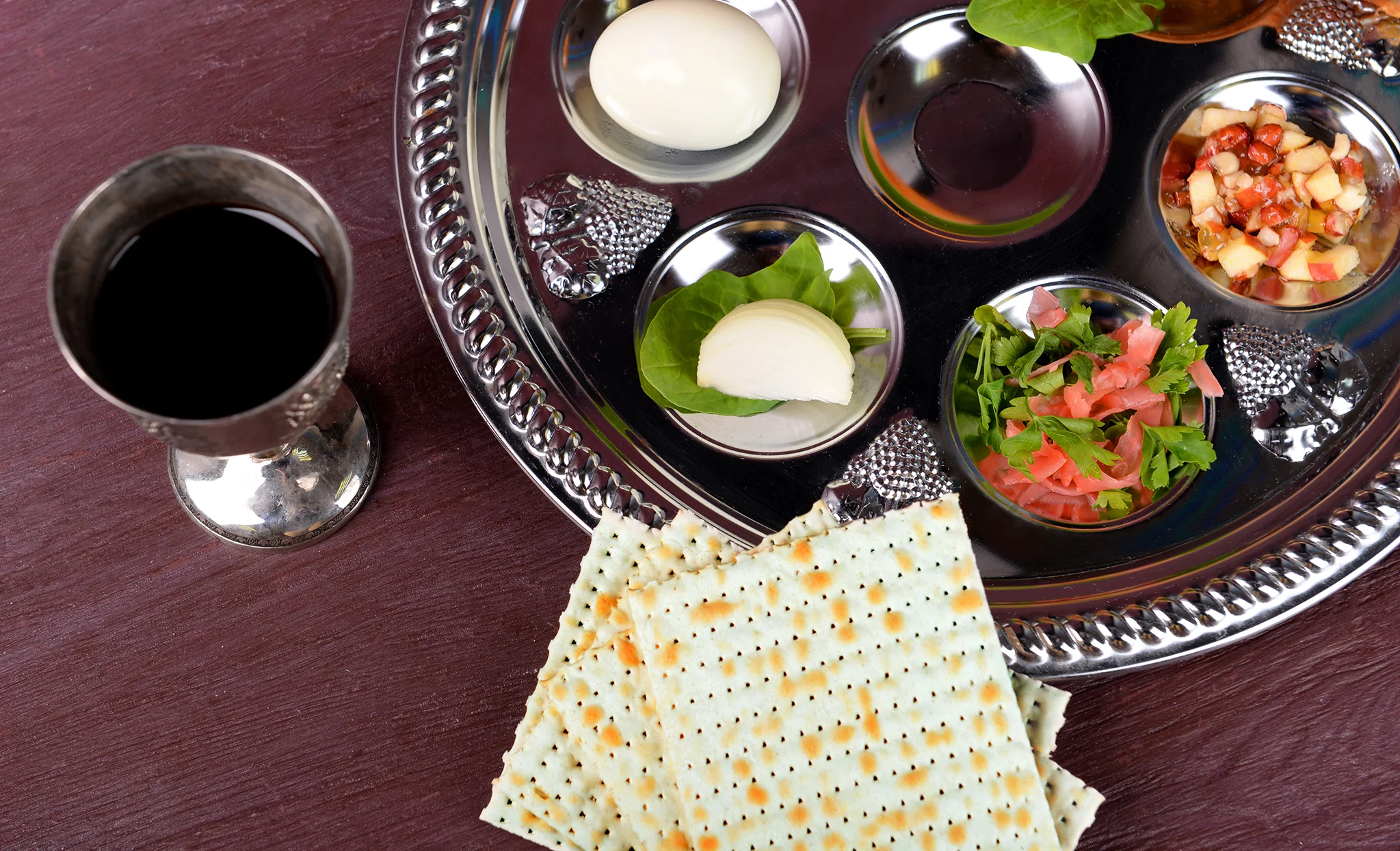
One of the most important annual events on the Hebrew calendar is the Passover meal and the seven-day Feast of Unleavened Bread. This powerful biblical holiday commemorates the Exodus story—the deliverance of Israel from their slavery in ancient Egypt. For Christians, this story is a prophetic picture of our own deliverance from our slavery to sin.

Did you know that God gives us physical things to do in order to teach us spiritual principles? Indeed, He didn’t give us a bunch of random commandments just to watch us jump through religious hoops. He is a loving Father, and His Torah (instructions) is designed to teach us His character and His truth. Every “jot and tittle” in God’s Word has a profound Spiritual purpose—whether or not we recognize it from our limited perspectives.

The Feast of Purim commemorates the deliverance of the Jewish people from the evil Prime Minister Haman's conspiracy to destroy them. It's a celebration of God's love and protection in the midst of a hostile world. What are some ways we can celebrate this joyful feast?

It's easy to get discouraged by the instability of our culture these days. There is a growing distrust towards our leaders, the Media, and each other—and for good reasons, in many cases! But we shouldn't feel hopeless. Instead we should consider this the perfect opportunity to be a light in the darkness by offering something different, something stable, something that people can hold on to.

In Matthew 24, Yeshua (Jesus) told His followers to look for very specific signs that will mark the end of this present age and signify His Second Coming. But what are faithful followers of the Messiah supposed to do with these signs? How are we to live our lives as these signs begin to take place?

Have you ever heard the popular saying, “Hurt people hurt people”? The idea is that when someone acts like a jerk, someone else was likely a jerk to them. Someone planted that seed in his or her life. Thus, they don’t know what else to do except produce the fruit of death that comes forth from that seed.
Why on earth does God care about whether or not we rest on the Sabbath or eat unclean animals? Is it that big of a deal? What do these things really have to do with being a Christian?

Did you know that you and your spouse weren’t brought together by accident? God put you together for a reason, which is to fulfill His will on earth and to be a picture of Messiah and the Church. Marriage is important to God, and He desires your marriage to flourish.

During His famous sermon on the mount, Yeshua (Jesus) made it very clear to His audience what He was doing with regard to the Torah (Law) and Prophets. He told them not to think that He came to abolish them, but to fulfill them. What does that mean?

From the very beginning we see that God’s divine purpose for man includes being in community. Indeed, it was God Himself who said, "It is not good that man should be alone" (Genesis 2:18). God declared everything else in creation tov—good—but He apparently thought it was a problem that Adam didn’t have any fellowship. So, what did He do? He established the very first community of believers by creating Chavah (Eve), thus showing that His divine will for man is perfected in the fellowship and unity of His people.

In Acts 10, God gave Peter a vision of a sheet descending from the heavens. Included in the sheet were some unclean animals. He told Peter, "What God has made clean, do not call common." Was God telling Peter that it’s now okay to eat unclean animals?
Apologetics
As Christians around the world are embracing the roots of their faith and returning to what the Bible says about many practical issues, a very relevant question is often asked: Should men shave their beards?
As believers around the world are being drawn back to the roots of their Christian faith and thus embracing the lifestyle and teachings of Yeshua (Jesus) and the apostles, there are often questions about some major parts of the Torah. It’s easy for most people to acknowledge the validity of commandments like the Sabbath and dietary instructions, but what about the priesthood? What about animal sacrifices? Isn’t Yeshua our High Priest? Isn’t He our sacrifice?
Recently I was blessed to participate in an hour-long formal debate on the role of Torah in the lives of Christians. My opponent in the debate was Tony Yu, founder of the popular Facebook page, “Hebrew Roots Heresy.” The debate was hosted and moderated by Josh Tolley of The Josh Tolley Show.
Why on earth does God care about whether or not we rest on the Sabbath or eat unclean animals? Is it that big of a deal? What do these things really have to do with being a Christian?
During His famous sermon on the mount, Yeshua (Jesus) made it very clear to His audience what He was doing with regard to the Torah (Law) and Prophets. He told them not to think that He came to abolish them, but to fulfill them. What does that mean?
In Acts 10, God gave Peter a vision of a sheet descending from the heavens. Included in the sheet were some unclean animals. He told Peter, "What God has made clean, do not call common." Was God telling Peter that it’s now okay to eat unclean animals?

If you start reading the Bible from the beginning of Genesis, you can’t even get four words in without being confronted with two profound truth claims. First, there was a beginning. Second, God exists.

The greatest commandment in the Torah/Law of God includes loving the Lord your God with “all your mind” (Matthew 22:36-40). What does that mean?
Devotional
We often think of prosperity as something material. Prosperity from walking in obedience is often the opposite. It is having a deeper relationship with the Creator. It is when the desires of our heart become His desires.
Emotions are powerful. Our emotions, like compassion and empathy, often motivate us to do wonderful things like give to charity and help people in need. When we see an injustice, many times it will deeply affect us and move us to take positive action. And yet, strong negative emotions—jealousy, vindictiveness, resentment—can often overpower our better judgment and move us to neglect or hurt people.
The difficulties that we endure in this life are sometimes so painful that we feel stuck in unending sorrow. Many of us have been through tragedies that have left us with a crushing despair, which years later turns into a continuous dull ache that never leaves. We become despondent and therefore reluctant to believe that God could heal us.
Can you recall times in your life when you’ve lost control of your emotions? Perhaps it happens more often than you’d like to admit. We’ve all had heated moments where we’ve reacted out of anger or pain, often provoking others and dragging out arguments. What guidance do the Scriptures give us in these situations?
Is there a danger of leaving Jesus and the Gospel behind in our pursuit of Torah obedience?
Many of us carry around a deep sense of rejection, insecurity, and longing. We struggle to feel accepted, which sometimes drives us to unhealthy behavior. What does the Bible teach us about overcoming these feelings?
When the New Testament authors talk about Abraham, they always highlight his faith. Indeed, Abraham is most well known, both in Judaism and Christianity, for his great faith in the God of Israel. But Abraham also exhibited another important godly characteristic that is often overlooked: hospitality.
Our Messiah said that His return at the end of the age will be like the days of Noah. What can we learn from Noah's flood as it concerns the end days?
We are told in 1 John 4:1 and other passages to “test” the message of a teacher or prophet to see if what they say is truly from God. The reason is that “many false prophets have gone out into the world” and are leading believers astray. What are some of the identifying marks of a false teacher/prophet?
I love to be outside in Yahweh’s beautiful creation. Not too long ago, I spent some time in the woods. I was a good distance from the truck, but I didn’t realize it until the sky started to darken and I heard thunder. A storm was coming. But it was too late. I knew there was no way I’d make it back to my vehicle.
It is often said that believers ought not to judge. Indeed, “Judge not that you be not judged” is one of the most memorized Bible verses ever. Even people who have never read a Bible in their life will immediately quote that verse to silence anyone who might dare express disapproval toward them. But is it true that we are not to ever judge anyone?
Feelings are important and shouldn't be dismissed. But we must not be led by our feelings. We cannot assume that our feelings reflect the complete truth of any situation. Our feelings reflect only how we interpret the truth of the situation. New information or another perspective often leads to a different interpretation.

On every 4th of July in America, we are reminded of the value of liberty. But liberty is not an American concept; it's a biblical concept. God created us to be free.
Why do people complain and rebel against God’s will? Before we answer that question, it’s important to understand that the reason given by the complaining rebels is usually not the complete picture. They give one reason for their complaint, but there is often a secret reason below the surface.
Recently my wife Diana and I had the opportunity to travel to North Carolina to attend and speak at a conference. The weekend was wonderful, and I was so blessed by the encouragement from believers around the world. But I admit I didn’t feel that way at the beginning.
Did you know that God gives us physical things to do in order to teach us spiritual principles? Indeed, He didn’t give us a bunch of random commandments just to watch us jump through religious hoops. He is a loving Father, and His Torah (instructions) is designed to teach us His character and His truth. Every “jot and tittle” in God’s Word has a profound Spiritual purpose—whether or not we recognize it from our limited perspectives.
It's easy to get discouraged by the instability of our culture these days. There is a growing distrust towards our leaders, the Media, and each other—and for good reasons, in many cases! But we shouldn't feel hopeless. Instead we should consider this the perfect opportunity to be a light in the darkness by offering something different, something stable, something that people can hold on to.
In Matthew 24, Yeshua (Jesus) told His followers to look for very specific signs that will mark the end of this present age and signify His Second Coming. But what are faithful followers of the Messiah supposed to do with these signs? How are we to live our lives as these signs begin to take place?
Have you ever heard the popular saying, “Hurt people hurt people”? The idea is that when someone acts like a jerk, someone else was likely a jerk to them. Someone planted that seed in his or her life. Thus, they don’t know what else to do except produce the fruit of death that comes forth from that seed.
Why on earth does God care about whether or not we rest on the Sabbath or eat unclean animals? Is it that big of a deal? What do these things really have to do with being a Christian?
Did you know that you and your spouse weren’t brought together by accident? God put you together for a reason, which is to fulfill His will on earth and to be a picture of Messiah and the Church. Marriage is important to God, and He desires your marriage to flourish.
From the very beginning we see that God’s divine purpose for man includes being in community. Indeed, it was God Himself who said, "It is not good that man should be alone" (Genesis 2:18). God declared everything else in creation tov—good—but He apparently thought it was a problem that Adam didn’t have any fellowship. So, what did He do? He established the very first community of believers by creating Chavah (Eve), thus showing that His divine will for man is perfected in the fellowship and unity of His people.

There is perhaps no experience more painful than losing a loved one to death. What does the Bible say about finding comfort and hope in these difficult times?

One of the greatest temptations of mankind is to exalt ourselves. We want people to think we're the smartest, coolest, and most talented. We want to be seen and admired for our gifts and talents. It's natural to desire acceptance and affirmation from others, but there's a danger of idolatry when we make God's work about us instead of Him.

In the Bible we often see God speaking to people, seemingly having regular conversations with them, and revealing Himself in very tangible ways. But that’s not the regular experience of many believers today. Did something change?

In chapter one of Acts, Luke speaks of the miracles that Yeshua did to prove He was alive after He was resurrected. He appeared to the disciples and many others for forty days and taught them about the kingdom of Yahweh. This chapter is also where Yeshua tells the apostles to wait in Jerusalem for the gift that the Father had promised—the receiving of the Holy Ruach (Spirit).

Yeshua said that the world would know the Father sent Him when His followers are united (John 17:21). Therefore, we as believers have an important duty to try to maintain unity within the body of Messiah. But in order to work towards unity, we must first identify the cause of disunity.

Solomon, the author of Ecclesiastes, wrote how there is a time for everything. There’s “a time to weep, and a time to laugh; a time to mourn, and a time to dance” (Ecclesiastes 3:4). The season of Sukkot is not the time of weeping and mourning. That time was during the month of Elul leading all the way up to Yom Kippur. Sukkot is the time of laughing and dancing. Indeed, God explicitly commands us to “rejoice” in this season!

A consistent theme that we see in the Scriptures is God’s call for His people to make up their minds. God spoke through the prophet Elijah, “How long will you go limping between two different opinions? If the Lord is God, follow him; but if Baal, then follow Him” (1 Kings 18:21). God sovereignly chose these words to appear in His Holy Scriptures to be read by us today. He’s asking us the same question: How long before we decide whom we want to follow?

On the Hebrew Calendar, the month before the fall feast days is called Elul. In Judaism, this month is traditionally associated with the theme of repentance, or in Hebrew, teshuvah. It’s a time of introspection, reconciliation, and preparation.
Feast Days
The feast of Shavuot—better known as Pentecost—is one of the most amazing events on the Hebrew calendar. How do we as believers celebrate this biblical festival today?
One of the most important annual events on the Hebrew calendar is the Passover meal and the seven-day Feast of Unleavened Bread. This powerful biblical holiday commemorates the Exodus story—the deliverance of Israel from their slavery in ancient Egypt. For Christians, this story is a prophetic picture of our own deliverance from our slavery to sin.
Did you know that God gives us physical things to do in order to teach us spiritual principles? Indeed, He didn’t give us a bunch of random commandments just to watch us jump through religious hoops. He is a loving Father, and His Torah (instructions) is designed to teach us His character and His truth. Every “jot and tittle” in God’s Word has a profound Spiritual purpose—whether or not we recognize it from our limited perspectives.
The Feast of Purim commemorates the deliverance of the Jewish people from the evil Prime Minister Haman's conspiracy to destroy them. It's a celebration of God's love and protection in the midst of a hostile world. What are some ways we can celebrate this joyful feast?

Hanukkah, also known as the Feast of Dedication or the Festival of Lights, is a holiday commemorating the rededication of the second Temple. It is a celebration of faith and uncompromising commitment to God’s Word as we remember the Maccabean revolt during which a small Jewish army fought against the forces of evil in their day and took back the Temple, cleansing it and rededicating it to God. How do we celebrate this amazing eight-day feast?

Christmas is celebrated every year on December 25 by millions of people around the world. Christians and non-Christians alike fully embrace the holiday season, observing many of its traditions, such as Christmas trees, mistletoe, Santa Claus, and of course gift giving. Does the Bible offer any insight into whether or not Christians should celebrate this holiday?

"Okay, I’ve been convinced that we as Christians should keep the Sabbath. Now what? How do I keep it?"
Solomon, the author of Ecclesiastes, wrote how there is a time for everything. There’s “a time to weep, and a time to laugh; a time to mourn, and a time to dance” (Ecclesiastes 3:4). The season of Sukkot is not the time of weeping and mourning. That time was during the month of Elul leading all the way up to Yom Kippur. Sukkot is the time of laughing and dancing. Indeed, God explicitly commands us to “rejoice” in this season!

The feast of Sukkot, more commonly known as the feast of of Tabernacles, marks the end of the biblical fall feasts. It’s the most joyous celebration on the Hebrew calendar as God’s people come together and celebrate before the Lord in anticipation for the return of the Messiah and the wedding supper of the Lamb.

Throughout the year there are several days that God declares to be “appointed times” in the Bible (Leviticus 23:2). These are special times that God told us to remember and observe. Yom Kippur—the Day of Atonement—is regarded as the most important of them all.

Did you know that God commands us to rejoice and make noise? Indeed, Yom Teruah—also known as the Feast of Trumpets or Rosh HaShanah—is an incredible celebration during which believers come together to worship the God of Israel with shouts of joy and the blast of the shofar as we look forward to the second coming of our Messiah, Yeshua (Jesus).
On the Hebrew Calendar, the month before the fall feast days is called Elul. In Judaism, this month is traditionally associated with the theme of repentance, or in Hebrew, teshuvah. It’s a time of introspection, reconciliation, and preparation.
On every 4th of July in America, we are reminded of the value of liberty. But liberty is not an American concept; it's a biblical concept. God created us to be free.